IBC Blog & Field Notes
Detailed articles on used IBC buying, reconditioning, warehouse operations, logistics, contamination control, and real-world container management.
Get a Free Quote
Tell us what you need — we respond within 24 hours.
Stay Ahead with IBC Industry Knowledge
The IBC tote market moves fast. Regulations change, new applications emerge, and operational best practices evolve every year. Our blog is written by experienced professionals who work with IBC totes daily — from procurement and reconditioning to warehouse management and regulatory compliance.
Whether you are a procurement manager evaluating suppliers, a warehouse supervisor optimizing handling procedures, a small business owner exploring cost savings, or a homeowner planning a rainwater project, our articles provide practical, actionable guidance grounded in real-world operations.
38+
Published Articles
6
Expert Authors
12+
Topic Categories
Weekly
New Content
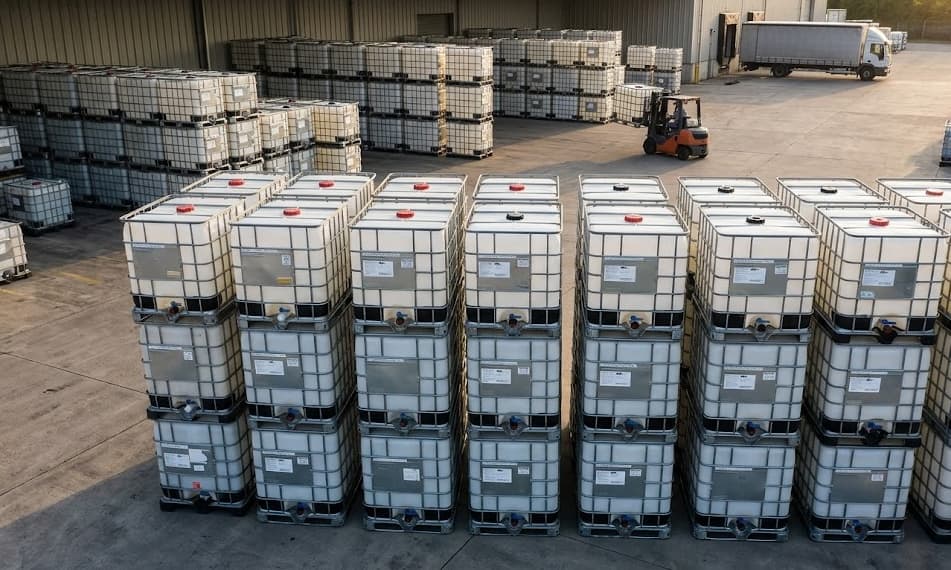
Industry insights from Baltimore's leading IBC recycler
Practical articles on procurement, maintenance, logistics, and sustainability
Latest Articles
A realistic library of operational guidance for teams buying, selling, cleaning, storing, moving, and reusing IBC totes.
Published posts
38
Showing 1-10 of 38 posts
How to Build a Rainwater Harvesting System with IBC Totes
A detailed, project-level guide to designing, building, and maintaining a multi-tote rainwater harvesting system using retired IBC containers — from site planning and plumbing to filtration, overflow management, and year-round maintenance.
A properly designed IBC rainwater harvesting system can capture 550+ gallons from a single storm event, providing weeks of irrigation water for a large garden or small farm plot at nearly zero ongoing cost.
IBC Tote Recycling: What Happens to Your Old Containers
A behind-the-scenes look at the complete lifecycle of a retired IBC tote — from collection and assessment through disassembly, material recovery, and the second lives of HDPE, steel, and wood components.
When you send an old IBC to recycling, you are not creating waste — you are feeding a material recovery process that returns 98% of the container's components to productive use.
Get IBC Insights Delivered to Your Inbox
Join over 800 industry professionals who receive our bi-weekly newsletter covering IBC market trends, operational tips, regulatory updates, and exclusive deals on reconditioned totes.
No spam. Unsubscribe anytime. We respect your inbox.
The Complete Guide to IBC Tote Cleaning and Sanitization
April 10, 2026 • Marissa Cole
A comprehensive walkthrough of cleaning methods, sanitization protocols, chemical selection, equipment requirements, and quality verification for reconditioning IBC totes across food-grade, industrial, and hazmat applications.
Proper IBC cleaning is the difference between a reusable asset and an expensive liability — the method must match the residue, the chemistry, and the intended next use.
How to Build a Rainwater Harvesting System with IBC Totes
March 25, 2026 • Daniel Price
A detailed, project-level guide to designing, building, and maintaining a multi-tote rainwater harvesting system using retired IBC containers — from site planning and plumbing to filtration, overflow management, and year-round maintenance.
A properly designed IBC rainwater harvesting system can capture 550+ gallons from a single storm event, providing weeks of irrigation water for a large garden or small farm plot at nearly zero ongoing cost.
IBC Tote Recycling: What Happens to Your Old Containers
March 8, 2026 • Nina Alvarez
A behind-the-scenes look at the complete lifecycle of a retired IBC tote — from collection and assessment through disassembly, material recovery, and the second lives of HDPE, steel, and wood components.
When you send an old IBC to recycling, you are not creating waste — you are feeding a material recovery process that returns 98% of the container's components to productive use.
Top 10 Industries That Rely on IBC Totes
February 18, 2026 • Evan Mercer
A deep dive into the ten industries that consume the most IBC totes, how each sector uses them differently, the specific requirements that drive their purchasing decisions, and why the reusable tote market continues to grow across all of them.
IBC totes are one of the most versatile industrial packaging formats in existence — serving everything from food manufacturing to wastewater treatment, and the market is growing at 6.2% annually.
The Future of Sustainable Packaging: IBC Totes Leading the Way
January 30, 2026 • Nina Alvarez
An in-depth analysis of how IBC totes are at the forefront of the sustainable industrial packaging revolution — examining circular economy models, material innovations, regulatory trends, carbon accounting, and the business case for companies transitioning away from single-use packaging.
By 2030, the circular economy for industrial packaging will be worth $45 billion globally — and IBC totes are the fastest-growing segment because they were designed for reuse from the beginning.
How to Start a Rain Barrel System with Repurposed IBCs
March 15, 2025 • Daniel Price
A step-by-step guide for homeowners and community gardeners who want to capture and store rainwater using retired IBC totes safely and effectively.
A well-designed IBC rain system can store over 275 gallons from a single downspout — enough to irrigate a large garden for weeks.
IBC Tote Safety: A Complete Guide for Warehouse Workers
February 28, 2025 • Lena Hart
Essential safety practices for anyone who handles, moves, stores, or works near IBC totes in warehouse and industrial environments.
Most IBC-related injuries are preventable with proper training, equipment, and consistent daily practices.
The Environmental Impact of Industrial Container Recycling
February 10, 2025 • Nina Alvarez
A data-driven look at how recycling and reconditioning IBC totes reduces carbon emissions, conserves resources, and moves industry toward a circular economy.
Every IBC tote that is reconditioned instead of replaced saves approximately 75 kg of CO2 emissions — the equivalent of driving 185 miles in a gasoline car.
5 Creative Ways Breweries Use IBC Totes
January 22, 2025 • Evan Mercer
How craft breweries in the Baltimore area and beyond are finding cost-effective, space-efficient uses for IBC totes in their production and distribution operations.
Craft breweries are among the most creative users of IBC totes, finding applications from ingredient storage to wastewater management.
How to Inspect Used IBC Totes Before Buying in Bulk
January 18, 2025 • Evan Mercer
A practical inspection framework for buyers evaluating multiple truckloads of used IBC totes without wasting time on cosmetic issues that do not affect service life.
Bulk buyers lose money when they grade totes by appearance instead of serviceability.
Budgeting for IBC Cleaning and Reconditioning Without Guesswork
December 2, 2024 • Marissa Cole
How to estimate labor, replacement parts, wastewater handling, and loss rates when setting a realistic budget for reconditioning programs.
Reconditioning costs become unpredictable when managers ignore contamination classes and recovery rates.
Understanding IBC Date Codes and Expiration
November 15, 2024 • Daniel Price
How to read the manufacture date molded into an IBC bottle, what the cage data plate tells you, and why the 5-year DOT rule matters for regulated shipments.
Many buyers overlook the date code, but for UN-rated hazmat transport, an expired IBC is a compliance violation regardless of physical condition.
Choosing the Right Valve Material for IBC Service
October 21, 2024 • Daniel Price
A grounded guide to matching valve materials with food ingredients, detergents, corrosives, and general industrial liquids in reusable IBC programs.
Many tote failures blamed on containers actually start with mismatched valve materials.
Warehouse Slotting for 275 and 330 Gallon IBCs
September 12, 2024 • Kara Simmons
How to slot mixed IBC inventory so operators move faster, aisles stay safer, and aging stock does not disappear behind the next inbound load.
Good IBC slotting reduces damage, search time, and emergency reshuffling during peak weeks.
IBC Totes in Agriculture: Irrigation and Fertilizer Storage
August 18, 2024 • Marissa Cole
How farms and agricultural operations across Maryland use IBC totes for water storage, fertigation, pesticide mixing, and livestock watering at a fraction of the cost of dedicated farm tanks.
For many small to mid-size farms, a few well-placed IBC totes provide flexible liquid storage without the capital investment of permanent infrastructure.
What Buyers Miss in IBC Cage Condition Reports
July 29, 2024 • Evan Mercer
Why a cage can look acceptable in a spreadsheet and still create stacking, handling, or customer presentation problems once it lands in inventory.
Cage reports that focus on dents alone miss the geometry issues that drive rehandling and claims.
A Guide to IBC Valve Types and Replacements
June 20, 2024 • Daniel Price
Everything you need to know about IBC bottom discharge valves: types, sizes, gasket materials, replacement procedures, and how to choose the right valve for your application.
The valve is the most-used component on any IBC tote, and choosing the right one can prevent leaks, contamination, and costly downtime.
Preparing IBC Totes for Winter Storage in the Mid-Atlantic
June 14, 2024 • Lena Hart
A field-tested approach to protecting valves, labels, pallets, and bottle integrity during cold-weather storage in Maryland and surrounding states.
Winter storage issues usually start with trapped liquid and poor yard discipline, not with temperature alone.
How Baltimore Businesses Are Going Green with IBC Recycling
May 12, 2024 • Nina Alvarez
Real stories from Baltimore-area companies that have reduced waste, cut costs, and improved their sustainability credentials through IBC recycling and reconditioning programs.
Baltimore's industrial sector is proving that sustainability and profitability go hand in hand when businesses embrace IBC circular economy practices.
When to Recycle Instead of Recondition a Damaged IBC
April 26, 2024 • Nina Alvarez
A decision framework for determining when repair labor no longer makes financial or safety sense and recycling is the better outcome.
The right recycle decision protects both margin and credibility when a tote has crossed the line from repairable to questionable.
IBC Container Regulations: What You Need to Know
March 28, 2024 • Evan Mercer
A plain-language guide to the federal and state regulations that affect IBC tote purchasing, usage, reconditioning, transport, and disposal in the United States.
Non-compliance with IBC regulations can result in fines of $500 to $75,000 per violation — understanding the rules is not optional for commercial users.
Designing a Closed-Loop IBC Return Program That Actually Gets Containers Back
March 11, 2024 • Marissa Cole
What it takes to build a reusable container program with realistic retrieval rates, clean handoffs, and less hidden shrinkage.
Return programs fail less from lack of interest than from vague ownership and weak container visibility.
Comparing IBC Materials: HDPE vs Stainless Steel vs Composite
February 5, 2024 • Daniel Price
A thorough comparison of the three main IBC construction materials — HDPE composite, 304 stainless steel, and 316L stainless steel — covering cost, durability, chemical compatibility, and best applications.
Choosing the wrong IBC material can result in container failure, product contamination, or regulatory violations — the decision deserves careful analysis.
Switching Food Manufacturing Lines From One-Way Packaging to Reusable IBCs
January 23, 2024 • Daniel Price
A practical look at how food plants reduce packaging waste and improve handling efficiency when moving from drums and disposable totes to reusable IBC systems.
The operational gain is real, but only if sanitation, traceability, and return timing are designed together.
Spill Prevention Basics for IBC Fill and Discharge Areas
November 30, 2023 • Lena Hart
The small layout and maintenance choices that reduce leaks, splash events, and operator cleanup around tote handling stations.
Most chronic spill points are not dramatic failures; they are repeatable setup mistakes around routine operations.
Understanding Bottle Resin and UV Exposure in Outdoor IBC Use
October 5, 2023 • Nina Alvarez
Why outdoor service life depends on more than the bottle wall thickness and how buyers should think about UV exposure in yard storage and field deployments.
UV damage accumulates quietly; by the time it is obvious, resale confidence is already gone.
Planning Transportation for Mixed IBC Loads
August 17, 2023 • Kara Simmons
How to reduce loading surprises when shipments combine different tote sizes, grades, and pickup conditions across regional lanes.
Mixed loads are manageable when planning accounts for condition, stackability, and unloading sequence.
Writing a Practical IBC Handling SOP for Forklift Teams
June 28, 2023 • Lena Hart
What a useful standard operating procedure should include so safe tote handling survives beyond orientation day and actually shows up in daily work.
The best SOPs are specific enough to guide real decisions but short enough that operators will use them.
Building Safe Rainwater Systems From Retired IBCs
May 9, 2023 • Daniel Price
A realistic guide to selecting retired containers for non-potable rainwater projects without creating avoidable contamination or maintenance issues.
The previous contents of the tote matter more than the plumbing design that comes afterward.
A Supplier Audit Checklist for IBC Purchasing Teams
March 20, 2023 • Evan Mercer
What procurement and operations teams should verify before relying on an IBC supplier for recurring volume, consistent grading, and dependable paperwork.
The best supplier audits test process discipline, not just inventory on the day of the visit.
Reducing Cross-Contamination During IBC Changeovers
December 8, 2022 • Marissa Cole
How facilities can tighten transfer, rinsing, and staging practices so product changeovers do not create hidden contamination risk.
Cross-contamination risk often lives in handoff zones between cleaned containers and line-ready containers.
Labeling and Traceability Best Practices for Reusable IBCs
October 19, 2022 • Kara Simmons
A straightforward traceability model for reusable containers that keeps operations fast without sacrificing accountability.
Traceability systems fail when labels cannot survive yard conditions or do not match real workflow.
The Hidden Cost of Idle IBC Inventory
August 3, 2022 • Nina Alvarez
Why dormant tote inventory quietly erodes margin through yard space, labor drag, quality drift, and lost responsiveness.
Unused totes are not neutral assets when they consume space, inspection time, and management attention.
Why IBC Buyback Programs Stall and How to Fix Them
June 15, 2022 • Evan Mercer
The operational reasons tote buyback efforts lose momentum, from unclear prep requirements to pickup delays and weak account follow-up.
Buyback programs slow down when customers do not know what qualifies or how pickup actually works.
Choosing Between Steel, Plastic, and Composite Pallets on IBCs
April 7, 2022 • Daniel Price
How pallet type influences durability, sanitation effort, handling confidence, and total lifecycle economics for reusable tote fleets.
Pallet choice affects far more than base strength; it changes cleanability, appearance, and service profile.
How to Set Up a Quarantine Zone for Questionable Totes
February 24, 2022 • Kara Simmons
A practical guide to isolating suspect containers so they do not drift into sale-ready inventory or slow down receiving flow.
Quarantine zones work when they speed decisions instead of becoming long-term storage for uncertainty.
Estimating Service Life for Reconditioned IBCs
November 16, 2021 • Nina Alvarez
How buyers and users can think realistically about remaining life without pretending every tote has the same future under every application.
Remaining life is a function of application, condition, and handling discipline, not just age.
What Good IBC Yard Management Looks Like
September 9, 2021 • Lena Hart
The habits that separate a high-functioning tote yard from one that quietly burns labor and loses track of usable inventory.
Yard quality is visible in flow, separation, and status clarity long before it shows up in spreadsheets.
Popular Topics
Explore articles by subject. Click any topic to find related content across our library.
Browse the Archive
Our blog archive stretches back to 2021, covering every aspect of IBC tote operations. Browse by month to find articles from specific time periods, or explore our most popular evergreen guides that remain relevant regardless of when they were published.
Most Read This Month
The Complete Guide to IBC Tote Cleaning and Sanitization
14 min read • How-To
How to Build a Rainwater Harvesting System with IBC Totes
16 min read • Repurposing
IBC Tote Recycling: What Happens to Your Old Containers
13 min read • Recycling
Top 10 Industries That Rely on IBC Totes
15 min read • Industry
The Future of Sustainable Packaging: IBC Totes Leading the Way
15 min read • Sustainability
Need IBC Totes?
Whether you need new, reconditioned, or rebottled IBCs, we have the inventory and expertise to help. Get a free quote today.
Get a Free Quote