IBC Cleaning & Reconditioning
Our comprehensive 16-step cleaning and reconditioning process restores used IBC totes to like-new condition. Food-grade, industrial, and chemical protocols available — all backed by pressure testing and documented quality inspection.
Get a Free Quote
Tell us what you need — we respond within 24 hours.
Like-New Performance at a Fraction of the Cost
A new 275-gallon IBC tote costs $200 to $400+. A professionally cleaned and reconditioned unit delivers the same functional performance for 40-60% less — with the same structural testing and quality documentation.
Our Baltimore facility processes IBCs that held everything from food-grade syrups to industrial solvents. Each container goes through our rigorous 16-step process, customized with the appropriate cleaning chemistry for its specific residue profile. The result: a container you can trust for your next fill.
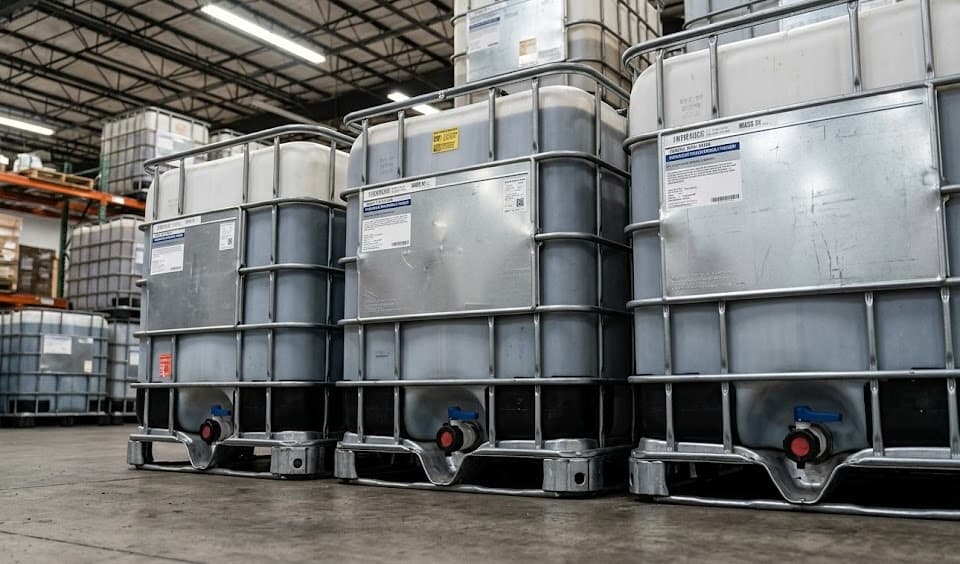
Every IBC inspected, cleaned, and certified to the highest standards
16-step process with documented quality checkpoints
The Complete 16-Step Cleaning Process
No shortcuts. Every IBC follows the same meticulous sequence from intake to final certification — the most thorough process in the mid-Atlantic region.
Intake & Content Identification
Each container is logged and its previous contents verified via SDS records, label review, and residue sampling. This determines the correct cleaning protocol — food-grade, industrial, or chemical decontamination.
External Inspection & Photography
Technicians photograph the container from multiple angles and record its condition on our tracking system. Cage integrity, bottle clarity, valve function, and pallet condition are all evaluated before cleaning begins.
Valve Removal & Disassembly
The bottom discharge valve and top fill cap are completely removed. Gaskets, O-rings, and sealing surfaces are separated for individual cleaning. This ensures every internal surface is fully accessible during washing.
Pre-Rinse & Residue Removal
Containers are inverted and fully drained. High-volume pre-rinse with warm water removes loose material, sediment, and the bulk of residual product from the HDPE interior walls.
High-Pressure Hot Wash
Automated wash heads deliver water at 160-180 degrees F and 1,500+ PSI, scouring the interior surface, bottom contours, and valve threading. Detergent formulation is matched to the specific residue type.
Chemical Neutralization (If Required)
Containers that held acids, caustics, solvents, or agricultural chemicals undergo targeted neutralization to render all residual traces chemically inert before the final rinse cycle.
Enzyme Treatment (Food-Grade Only)
For containers that held organic food products, enzymatic cleaning agents break down protein, starch, and fat residues at a molecular level. This step eliminates stubborn biofilm that hot water alone cannot remove.
Triple Rinse & Sanitize
Three consecutive rinse cycles with progressively cleaner water ensure zero detergent or chemical carry-over. Food-grade units receive an additional FDA-approved sanitizer application.
Odor Neutralization
Containers that retained strong odors undergo ozone treatment or activated-carbon air purging. This step ensures the HDPE bottle is completely odor-free, a critical requirement for food-grade and sensitive applications.
Interior Surface Verification
Technicians perform visual inspection under UV light, pH-strip testing on interior surfaces, and olfactory checks. Food-grade containers are additionally tested with ATP swabs for biological contamination.
Filtered Air Drying
HEPA-filtered, heated air is circulated through the container interior to eliminate all moisture. This prevents bacterial growth, mold formation, and odor retention in the HDPE bottle.
Valve Reconditioning & Reassembly
Discharge valves are cleaned, inspected for wear, and reassembled with new food-grade or chemical-resistant gaskets as appropriate. Thread integrity and flow rate are tested before reinstallation.
Cage & Frame Reconditioning
Steel cage frames are straightened on hydraulic presses, de-rusted with wire brushing or sandblasting, and coated with rust-inhibitive paint. Welds are inspected and repaired as needed.
Label Removal & Surface Finishing
All previous product labels, hazard markings, and adhesive residue are completely removed. The exterior bottle surface is cleaned and polished. New company or product labels are applied per customer specifications.
Pressure Testing & Final QC
Every container undergoes hydrostatic pressure testing at 7 PSI held for 15 minutes to confirm structural integrity. Passing units receive a dated inspection sticker with grade, technician ID, and certification details.
Documentation & Release
A unique inspection report is generated for each container recording every step performed, test results, and the assigned quality grade. The container is cleared for inventory, customer delivery, or sale.
Three Protocols for Every Application
We match the cleaning chemistry and process to the specific residue in your containers. Different contents require different approaches for guaranteed results.
Food-Grade Cleaning
Our food-grade protocol meets FDA 21 CFR and cGMP standards. We use only NSF-approved detergents and sanitizers, followed by bacterial swab verification on request.
- Edible oils, syrups, juices, and flavoring compounds
- Liquid soaps, surfactants, and personal care ingredients
- Vinegar, wine, and fermentation products
- Animal feed supplements and nutritional liquids
- Glycerin, propylene glycol, and USP-grade excipients
Industrial Cleaning
Our industrial protocol handles the full range of non-hazardous commercial and manufacturing residues. Fast turnaround — typically 24-48 hours for standard volumes.
- Petroleum products, lubricants, and hydraulic fluids
- Paints, coatings, and adhesive compounds
- Coolants, antifreeze, and metalworking fluids
- Detergents, cleaning solutions, and degreasers
- Latex, resins, and polymer emulsions
Chemical Decontamination
Our chemical protocol follows UN/DOT decontamination standards. We handle the most challenging residues and provide certificates of decontamination for regulatory compliance.
- Agricultural chemicals, herbicides, and pesticides
- Industrial acids (hydrochloric, sulfuric, phosphoric)
- Caustic solutions (sodium hydroxide, potassium hydroxide)
- Solvents (MEK, toluene, acetone, xylene)
- Specialty chemicals requiring specific neutralization
10-Point Quality Inspection
Every reconditioned IBC must pass our comprehensive 10-point quality checklist before leaving our facility. Containers that fail any single criterion are either re-processed or reclassified for recycling — we never ship a substandard unit.
Each inspection is documented with a unique report ID tied to the container, providing full traceability for your compliance records and quality management system.
Inspection Checklist
- 1HDPE bottle integrity — no cracks, crazing, warping, or UV damage
- 2Interior surface cleanliness — visual, olfactory, and pH-strip verification
- 3Valve operation — smooth threading, drip-free closure, new gasket installed
- 4Bottom outlet function — full-flow test and leak-free shutoff confirmed
- 5Cage structural integrity — straight tubes, solid welds, no excessive corrosion
- 6Pallet base condition — no cracks, rot, or structural compromise
- 7Label removal — all previous markings and adhesive residue eliminated
- 8Pressure test — hydrostatic test at 7 PSI held for 15 minutes minimum
- 9Date code verification — manufacture date confirmed within acceptable range
- 10Documentation — inspection sticker applied; grade, date, and tech ID recorded
Before & After Reconditioning
Real transformations from our facility. These represent typical results our team achieves daily.
Corn Syrup Residue
- Heavy amber staining throughout bottle
- Sticky, crystallized valve assembly
- Sugar deposits on bottom interior
- Strong sweet odor attracting pests
- Crystal-clear HDPE interior surface
- Rebuilt valve with new food-grade gasket
- Passed FDA cleanliness standards
- Certified for food-grade reuse
Hydraulic Oil
- Black oil film on all interior surfaces
- Heavy petroleum odor
- Greasy exterior cage and pallet
- Clogged bottom drain valve
- Oil-free interior verified by wipe test
- No detectable odor on sniff test
- Degreased cage and clean pallet
- Valve rebuilt with full flow restored
Agricultural Herbicide
- Chemical residue and crystallization
- Multiple hazard warning labels
- Corrosion around valve threads
- Required HazMat handling protocol
- Fully neutralized and rinsed interior
- All labels and markings removed
- New valve assembly installed
- Certificate of decontamination issued
Certifications & Industry Standards
FDA 21 CFR
Our food-grade cleaning meets all FDA regulations for containers used in food, beverage, and pharmaceutical applications.
EPA Compliant
All waste streams — rinse water, residuals, and cleaning agents — are handled in full compliance with EPA regulations.
DOT / UN Standards
Reconditioned IBCs meet DOT and UN performance standards required for the transport of regulated materials.
ISO 9001 Practices
Our quality management system follows ISO 9001 principles for documented, repeatable, and continuously improved processes.
Cleaning Agents & Safety Information
We use only proven, industry-approved cleaning agents selected for effectiveness and safety. Here is what goes into our cleaning process.
NSF-Approved Alkaline Detergent
Non-toxic, biodegradable alkaline cleaner formulated for food-contact surfaces. Effective against organic residues, fats, oils, and proteins. Meets NSF/ANSI 60 and FDA 21 CFR standards.
Non-corrosive, phosphate-free, safe for HDPE contact
Industrial Degreasing Solvent
High-performance degreasing agent that breaks down petroleum-based residues, lubricants, adhesives, and industrial coatings. Fast-acting formula reduces cleaning cycle time.
Low-VOC formulation, closed-system application, PPE required
Peracetic Acid Sanitizer
FDA-approved no-rinse sanitizer for food-contact surfaces. Provides 99.999% kill rate for bacteria, mold, and yeast. Decomposes into acetic acid (vinegar) and water.
Approved for food-contact, no residual toxicity
Sodium Hydroxide (Caustic Soda)
Strong alkaline solution for neutralizing acid residues and dissolving organic buildup. Used in controlled concentrations with full neutralization verification before rinse.
HazMat handling protocols, PPE required, pH-verified neutralization
Citric Acid Solution
Natural acidic cleaning agent for neutralizing caustic and alkaline residues. Also effective for removing mineral scale, hard water deposits, and metal oxide staining.
Food-safe, biodegradable, GRAS-listed ingredient
Enzymatic Bio-Cleaner
Biological enzyme blend that breaks down protein, starch, and lipid residues at a molecular level. Particularly effective against stubborn biofilm from fermentation, dairy, and sugar-based products.
Non-toxic, biodegradable, safe for all HDPE grades
Food-Grade vs. Chemical-Grade Cleaning
Understanding the differences between our cleaning protocols helps you select the right service level for your containers.
Food-Grade Protocol
Designed for containers that will hold food, beverage, pharmaceutical, or personal care products. Meets the strictest regulatory standards for human-contact materials.
- Only NSF/FDA-approved cleaning agents used throughout
- Enzyme treatment for organic residue breakdown
- Peracetic acid no-rinse sanitization
- ATP swab testing for biological contamination verification
- UV-light interior inspection for residual film
- HEPA-filtered drying to prevent airborne contamination
- New food-grade gaskets and seals installed
- FDA 21 CFR compliance documentation provided
- Bacterial culture testing available on request
- Kosher/Halal certification support available
Chemical-Grade Protocol
Engineered for containers that held industrial chemicals, solvents, acids, or caustics. Focuses on complete decontamination and chemical neutralization.
- Chemical-specific neutralization agents matched to residue
- Multi-stage neutralization with pH verification at each step
- Extended soak cycles for stubborn chemical deposits
- Solvent rinse for petroleum and polymer-based residues
- Chemical-resistant replacement gaskets and valves
- Decontamination certificate with chemical analysis results
- UN/DOT re-rating assessment for regulated transport
- HAZWOPER-trained technicians handle all processing
- Full waste manifest for removed chemical residues
- Compatible with subsequent food-grade cleaning if needed
Quality Control Checkpoints
Quality is not just the final inspection — it is embedded at every stage of our cleaning process. Our technicians perform verification checks at seven critical points throughout the 16-step process to catch issues early and ensure consistent results.
Any container that fails a checkpoint is immediately flagged, re-processed from the failed step, or reclassified for recycling if the issue cannot be corrected. We never ship a container that has not passed every single checkpoint.
Intake Verification
Step 1Confirm container identity, contents, and initial condition match customer documentation. Flag any discrepancies.
Pre-Wash Drain Test
Step 4Verify the container is fully drained with no pooling. Test drain rate to confirm valve function before cleaning begins.
Post-Wash Residue Check
Step 5pH-strip test of interior surfaces. Visual inspection for remaining film, staining, or particulate. Re-wash if needed.
Sanitization Verification
Step 8For food-grade: ATP swab test confirming biological contamination below threshold. For chemical: pH and chemical spot test.
Odor Clearance
Step 9Independent olfactory test by a second technician. Containers with detectable odor return to ozone or carbon treatment.
Structural Integrity
Step 15Hydrostatic pressure hold at 7 PSI for 15 minutes. Any pressure drop indicates a leak — container is failed and assessed for repair or recycling.
Final Release Audit
Step 16Complete documentation review. All checkpoints verified as passed. Inspection sticker applied. Container cleared for delivery or inventory.
Service Levels & Turnaround
We offer multiple service levels to match your timeline. Rush service is available when you need containers back fast.
For urgent needs. Priority processing jumps your containers to the front of the queue. Available for standard industrial cleaning of 1-20 units.
25% surchargeOur most popular option. Full 16-step process with all quality checkpoints. Suitable for all cleaning protocols and container volumes.
Standard pricingOptimized for large orders of 25+ containers. Volume pricing with dedicated processing line. Consistent quality across every unit.
10-20% volume discountFor clients with regular container flow. Fixed pricing, dedicated scheduling, and guaranteed turnaround times defined in your service agreement.
Best per-unit pricing
Cleaning & Reconditioning Pricing Tiers
Four service levels to match your container condition and intended reuse application.
Simple hot-water rinse for containers with light, water-soluble residues. Suitable for non-food industrial reuse where full sanitization is not required.
- Hot water pre-rinse and flush
- Basic drain and dry
- Visual inspection
- Valve function check
- Condition grade assignment
Full high-pressure wash with matched detergent, triple rinse, and complete reconditioning. Our standard service for most industrial applications.
- Full 16-step process
- Matched detergent chemistry
- Triple rinse cycle
- Component reconditioning
- New gaskets installed
- Pressure testing
- Inspection sticker
FDA-compliant cleaning with enzyme treatment, peracetic acid sanitization, and ATP verification. Required for food, beverage, and pharmaceutical reuse.
- Everything in Deep Clean
- Enzyme bio-treatment
- FDA-approved sanitization
- ATP swab verification
- UV-light inspection
- HEPA-filtered drying
- FDA compliance documentation
Full chemical neutralization, extended soak cycles, and hazmat-grade decontamination. For containers that held acids, caustics, solvents, and regulated chemicals.
- Everything in Deep Clean
- Chemical-specific neutralization
- Multi-stage pH verification
- Extended soak cycles
- Decontamination certificate
- Waste manifest provided
- UN/DOT re-rating assessment
Prices are per-container estimates. Final pricing depends on container condition, previous contents, and volume. Volume discounts apply for orders of 10+ units.
What We Can & Cannot Clean
Residues We Successfully Clean
Residues We Cannot Clean
Requires specialized licensed disposal facilities. We cannot accept containers with any level of radioactive contamination.
Medical waste, blood products, and pathogenic materials require autoclave sterilization and regulated medical waste disposal.
Once fully cured, these materials bond permanently to HDPE and cannot be removed without damaging the container.
Hardened cite materials embed in the HDPE surface texture and cannot be fully cleaned to food-grade or most industrial standards.
Asbestos-contaminated containers require EPA-regulated disposal and cannot be cleaned for reuse.
PCB contamination requires TSCA-regulated disposal. These containers cannot be decontaminated for commercial reuse.
Not sure? Contact us with the SDS or product name and we will confirm whether we can clean your specific containers.
Get Your IBCs Professionally Cleaned
Request a cleaning quote today. Volume pricing available for 10+ container orders, with typical turnaround of 3-5 business days.
1012 Wilson Dr, Baltimore, MD 21223